We see that, for each and everything in this world, there is some producer, some generator, some Master, some Lord. There is also a Master of this world, ocean, sun, moon, wind, space etc., this entire creation that is visible. That Master, that Lord, is the Lord of everyone, but He himself has no Master. He is the generator of all, but there is no one who is His generator. That one is called Paramātmā.
The surprising thing is that man is attracted to and considers the things generated by Paramātmā to be his own. He places value on having things; hence, he considers himself to be great, but he pays no attention to the generator, the Master, the Lord of those things!
God says to Arjun‒
इहैकस्थं जगत्कृत्स्नं पश्याद्य सचराचरम् । मम देहे गुडाकेश यच्चान्यद् द्रष्टुमिच्छसि ॥
(गीता ११ । ७)
ihaikasthaṁ jagatkṛtsnaṁ paśyādya sacarācaram.
mama dehe guḍākeśa accānyaddraṣṭumicchasi
(Gītā 11/7)
Meaning: O Gudākesha (Conqueror of sleep, Arjun)! Now behold the entire creation of animate and inanimate beings, and whatever else you wish to see, all unified in my body. (Gītā 11/7)
Which means that along with the movable and immovable, see in entirety, everything in this universe as unified in my body, in one place only, and see it now!.‒‘पश्याद्य’ and where should you see ? ‘मम देहे’ – that is, in my body. Even Arjun says, “I see all the Deitiesin Your body” ‒
‘पश्यामि देवास्तव देव देहे’ (११ । १५)
Sanjay also says that Arjuna saw the entire universe in a fraction of the Lord’s body.
अपश्यद्देवदेवस्य शरीरे पाण्डवस्तदा ॥’ (११ । १३)
The name ‘गुडाका’ is for ‘Sleep’, and the conqueror of sleep is called ‘Gudakesha’. Arjuna is called ‘गुडाकेश’ (Gudakesha, the conqueror of sleep). Which means that being free of indolence, inertia etc. The Lord tells Arjuna to see with great care and tells him that if you wish to see anything else, that too you see.
‘यच्चान्यद् द्रष्टुमिच्छसि’
yaccānyaddraṣṭumicchasi (Gītā 11/7)
God comes to know what is on Arjuna’s mind, of what else he wished to see. Arjuna wanted to see and know whether he should fight or not, whether the victory will be his or theirs ‒
‘न चैतद्विद्मः कतरन्नो गरीयो यद्वा जयेम यदि वा नो जयेयुः ।’ (गीता २ । ६) ।
na caitadvidmah kataranno gareeyo,
yadvaa jayema yadi vaa no jayeyuh (Gītā 2/6)
Meaning: We don’t know which is meritorious for us, to fight or not to fight, nor do we know whether we shall win or they will conquer us. (Gītā 2/6)
In the end of the Tenth Chapter, God says, “O Arjuna! What is the need for this detailed knowledge? I stand supporting the entire universe with a single fragment of Myself.” I am sitting in front of you; thus, what is the need for you to know so many of my majestic glories. Simply look at me. Thereafter, Arjuna had the desire to look at that form of the Lord ‒
‘द्रष्टुमिच्छामि ते रूपमैश्वरम्’ (११ । ३)
drashtumicchaami te roopam;
aishvaram purushottama (Gītā 11/3)
Meaning: I long to see Your cosmic Divine form, O greatest of persons. (Gītā 11/3)
Therefore, this world is situated in an ‘ansh’ (Fraction) of the Lord. The creator of this world is He only. It’s support and Master is also He only. This world comes into existence and is later destroyed; it is flowing and changing constantly.
This ‘jiva’ who is an ‘ansh’ (fraction) of God, is giving significance to such a constantly changing world ‒
‘ममैवांशो जीवलोके’ (गीता १५ । ७)
Mamaivaamsho jeevaloke jeevabhootah sanaatanah |
(Gītā 15/7)
Meaning: The self that enables all the beings in this world has always been essentially an element of my own spirit. (Gītā 15/7)
God is the kind Who will stay always, all the time. In the same way His ‘ansh’ (Jiva, life element) is also the kind to stay always, all the time. That jiva is giving due consideration and attention to the ever-changing world – this is a very surprising thing!
God calls the insentient (inert) world to be His ‘Apara Prakriti’ (Lower Nature) and has called the sentient jiva (Life element) to be His ’Para Prakriti’ (Higher Nature). (Gītā 7/4-5).
However, the jiva has accepted the independent existence of this world by which this Universe is sustained ‒
‘ययेदं धार्यते जगत्’
Yayedam Dharyate Jagat ‘ (Gītā 7/5)
Meaning: By which the Universe is sustained. (Gītā 7/5)
In other words, jiva has become entangled in the world. If the jiva did not sustain this universe (meaning, did not take pleasure from it), the world will not remain. On the contrary, only God will remain ‒
‘वासुदेवः सर्वम्’ (७ । १९)
Vasudevah Sarvam (Gītā 7/19)
Meaning: Everything is God. (Gītā 7/19)
However, the jiva regards this world to be his own, becomes entangled in this world. Not only this, but by taking this world’s extremely despicable, degraded element – money – the jiva starts to believe himself to be great. It is such a surprising thing! Taking a little knowledge, little strength, he develops vanity and pride.
Hiranyakashipu asked Prahladji, “Who is yours?” Prahladji replied, “That One is mine, through whose fraction of power you have gained victory over the three worlds”.
Man takes the most base and degraded things in this world and feels that he is so great. However, the reality is that greatness is only in realizing God. Even if there is inclination towards God, man will become great! For one who has become inclined towards God, the entire world’s wealth and glory is also nothing. God says ‒
जिज्ञासुरपि योगस्य शब्दब्रह्मातिवर्तते । (गीता ६ । ४४)
“Jigyasurapi Yogasya shabda Brahmaativartate.” (Gītā 6:44)
Meaning: A seeker of Yoga (of equanimity) transcends actions and their fruits as laid down in the Vedas and will surely attain God-realization or salvation. (Gītā 6/44)
He who has a quest to know that Paramātmātattva (Divinity) makes inroads into the Vedas(Shabdabrahman). The fruits bestowed from the study of the Vedas, sacrifices, austerities, charities etc. exceeds and transgresses all those fruits and he attains that Eternal sovereign and ultimate post. (Gītā 8/28)
The opportune time is only possible in this human body which we have received. But then too, he is trapped in these despicable, inferior things, this is such a surprising thing! How long will these frivolous things be of use? Neither wealth nor family will stay with us forever; honor-praise will not remain, neither will this present state, the body will not remain either; because, these are not the kind to (stay) at all.
अजानन् दाहात्म्यं पतति शलभो दीपदहने, स मीनोऽप्यज्ञानाद्वडिशयुतमश्नाति पिशितम् ।
विजानन्तोऽप्येते वयमिह विपज्जालजटिलान्, न मुञ्चामः कामानहह गहनो मोहमहिमा ॥(भर्तहरिवैराग्यशतक)
Meaning: A moth falls into a lit lamp, not knowing the pain of burning to death. Unknowingly, a fish tries to bite into a piece of meat on a fish-hook and gets hooked and caught. Though knowing all this, we do not renounce desires, sense pleasures that entangle and trap a man in a complex web. Oh! This is the wonder of intense attachment!
One must think! So far we have been earning money, we have gained honor and fame, if we die today, of what use will all that money, honor and fame be? We have only destroyed our priceless time. Therefore, henceforth we must become alert. If we love the sovereign Master of this world, God, who is infinite and boundless, He too is ever ready to love us in the same way ‒
‘ये यथा मां प्रपद्यन्ते तांस्तथैव भजाम्यहम् ।’ (गीता ४ । ११)
“Ye yethaa maam prapadyante taamstathaiva bhayaamyaham”
“How so ever men approach Me, even so do I seek them” (Gītā 4/11)
Money does not even ask for our permission before leaving us, however much we lie, cheat or are dishonest etc. for acquiring it, rather it silently slips away. It doesn’t even feel any compassion that this person lied and cheated so much, was so dishonest, performed unlawful acts and various other sins to acquire me that before leaving him let me at least ask for his permission. We are running after things that have no regard for us, while we do not turn towards God who honors and respects us, who is friendly towards us, who loves us! God looks after us so much. He provides and nourishes us, and arranges for the essentials for our sustenance, whether we believe in Him or not. He is the Eternal well-wisher of all beings ‒
‘सुहृदं सर्वभूतानाम्’ (गीता ५ । २९)
“Suhrudam sarvabhootaanaam” (Gītā 5/29)
Meaning: I am the Eternal well-wisher of all beings. (Gītā 5/29)
Therefore, from today itself, resolve that I only want to walk the path towards God, I want to search for Him only, then there is no doubt in your salvation. By turning only towards God, all the magnificence, splendor and glory that is there, they will all be at your service.
All the great kings, lords and gods (devatās) too are servants of the devotees of God, and consider themselves to be most fortunate to receive ‘darshan’ of the devotees. We can all become like that. Everyone is not at liberty in accumulating worldly glories, but all are at liberty in realizing God. It is a surprising thing that we are turning away from liberty, independence and running and grabbing hold of bondage!
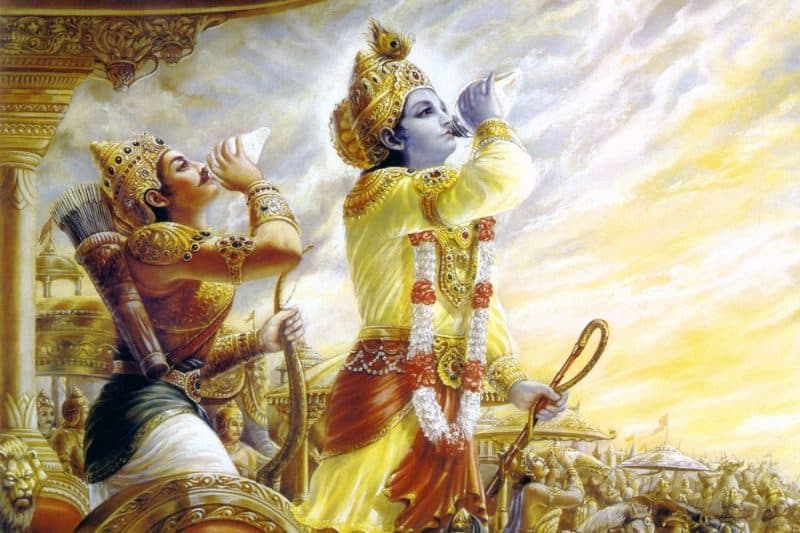
Let us establish a relationship with our Eternal beloved, God, who is the Master of this entire universe, who is the originator, the illuminator and sustainer of this universe, in whose single fraction (ansh), the entire creation is situated. Make Him either your mother or your father or your son or your brother or your friend or make Him your charioteer (as Arjuna did). He is ready and willing to become anything you wish. Arjuna says to the Lord, “Place my chariot between the two armies”, and the Lord abides in Arjuna’s command and does so. What an exceptional point this is! Nowadays, even your own son is not so obedient, and does not abide by your instructions. Leaving our loving Prabhu (Lord), you are going towards the cruel and brutal world; is this a wise thing to do?
अहो बकी यं स्तनकालकूटं जिघांसयापाययदप्यसाध्वी ।
लेभे गतिं धात्र्युचितां ततोऽन्यं कं वा दयालुं शरणं व्रजेम ॥
(श्रीमद्भा॰ ३ । २ । २३)
Meaning: Oh! Even that impious woman Putana who suckled the Lord at her breast (which was daubed with the deadliest poison) with intent to kill Him, got from Him in return the destiny appropriate to a foster mother! Other than Him is there anyone who is so merciful, who we should look at for protection? (Shrimadbhagwat 3/2/23)
From book in hindi ‘Sadhakon ke Prati’ by Shradhey Swamiji Shri Ramsukhdasji Maharaj
www.swamiramsukhdasji.net
Comments are closed.